
Blog

Blog

Property Title Work: Moving Forward With Defects
Property Title Work: Moving Forward With Defects

By Moye Law Office Editorial Team · Updated 2026-08-03
Property sales can often proceed despite title defects if the issues are resolved before closing—through a lien payoff, corrective deed, or title insurance endorsement. A title search conducted by Moye Law Office identifies potential issues early, allowing sellers to address defects and aim for a timely closing.
Key Takeaways
Title defects require forward thinking and careful consideration before proceeding with property sales.
Multiple resolution options exist for title defects, though quick solutions sometimes create larger problems later.
Title defects, despite their intimidating name, do not automatically prevent property transfers from occurring.
Moye Law Office serves Cabell, Kanawha, Lincoln, Mason, and Putnam counties for title issue resolution.
Can You Still Sell a Home With a Title Defect?
Yes, in most cases a sale can move forward even after a title defect surfaces. A missing deed, a boundary discrepancy, or a similar recorded issue rarely kills a transaction outright. It simply changes the path to closing. Buyers, sellers, and agents facing this news should treat it as a solvable puzzle rather than a dead end.
Are title defects actually common?
Title defects show up more often than most homeowners expect, and the label sounds scarier than the reality. In many instances, these issues are harmless once disclosed and resolved before the closing table. The danger comes from silence, not the defect itself — a problem addressed early rarely derails a deal. One hidden until the final signature often does.
What happens if the defect isn't caught early?
Delay costs money. A hidden lien, an unknown heir, or a surprise easement that surfaces late in the process frequently stalls a closing or drives up expenses for everyone involved. Agents watching a deal slip past its closing date. Buyers facing last-minute lender demands, know how disruptive that timing can be.
Moye Law Office manages property title work in-house, coordinating research directly rather than outsourcing it. That approach speeds up review and helps flag defects before they threaten a closing date. Handling the title search internally also means fewer handoffs and fewer chances for a problem to slip through unnoticed.
Sellers and agents facing a title defect gain the most ground by:
Disclosing the issue immediately, rather than hoping a buyer won't ask
Getting the record reviewed by counsel before a contract deadline arrives
Lining up a resolution path before the lender requests one
What Counts as a Title Defect?
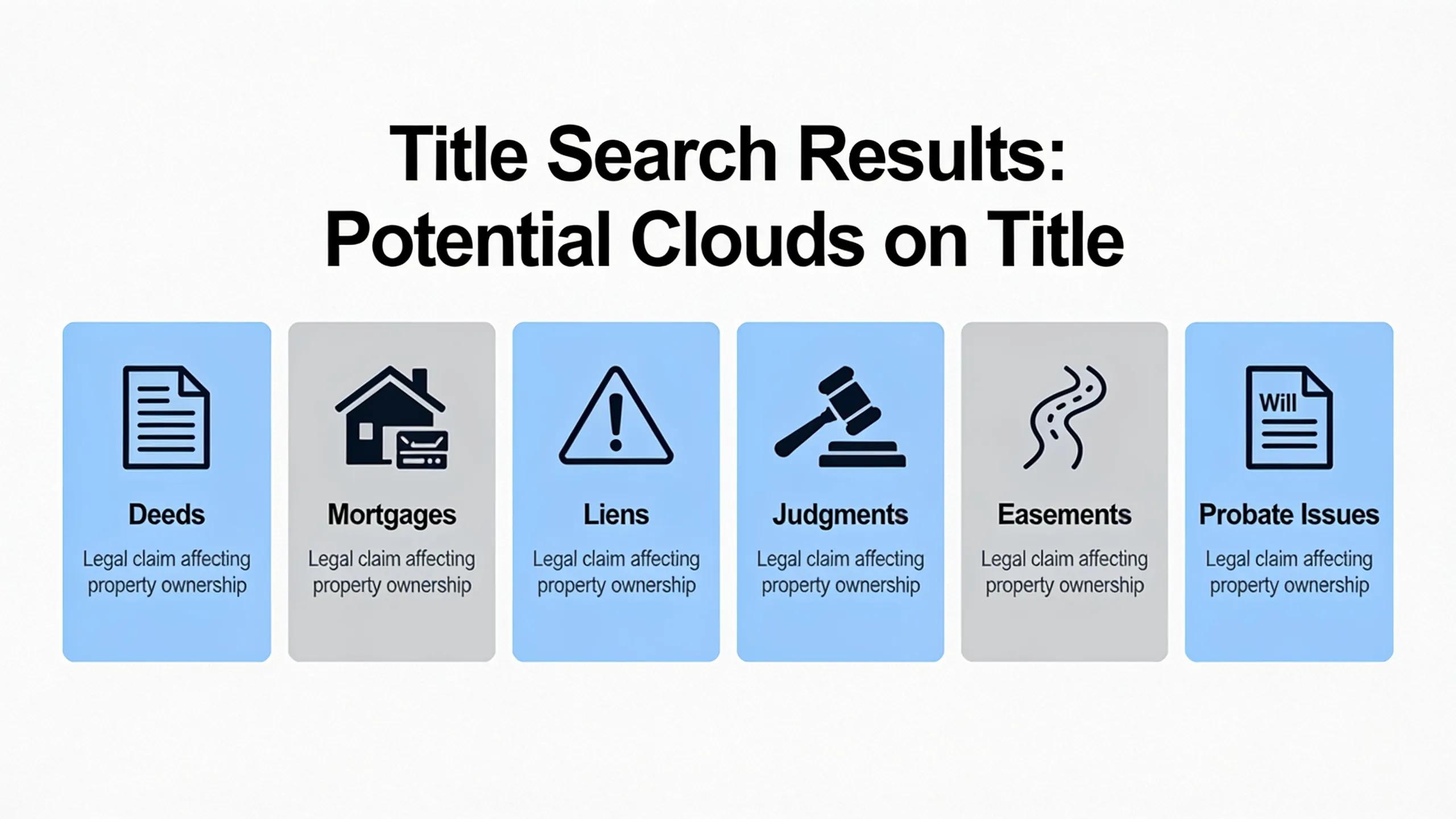
A title defect is any recorded claim, gap, or error that clouds legal ownership of a property. Title, as a legal matter, refers to ownership and the bundle of rights that come with it. Not the deed document itself, which merely transfers that ownership from one party to another. When something interrupts a clean chain of ownership, a defect exists, and it can stall or sink a pending sale if left unresolved.
A property title work review typically turns up several categories of problems. Common defects include:
Outstanding mortgages or liens the seller hasn't disclosed
Unpaid judgments attached to a previous owner
Missing signatures or errors in a prior deed
Undisclosed easements granting third parties access or use rights
Probate issues, such as unresolved heirship after an owner's death
Encroachments count too, and they don't have to be dramatic. A building corner sitting a few feet onto a neighbor's registered land is enough to trigger a defect finding, even when the structure itself has stood for decades without complaint. Lenders and buyers alike want that kind of overlap clarified before money changes hands.
Does a small boundary overlap really count as a title defect?
Yes. Even a minor physical encroachment — a fence, a porch corner, a shared driveway edge. Can qualify if it crosses onto land recorded under someone else's title. These issues rarely mean the sale is doomed, but they do require documentation and often a formal resolution before closing.
How do buyers and agents find out about these problems?
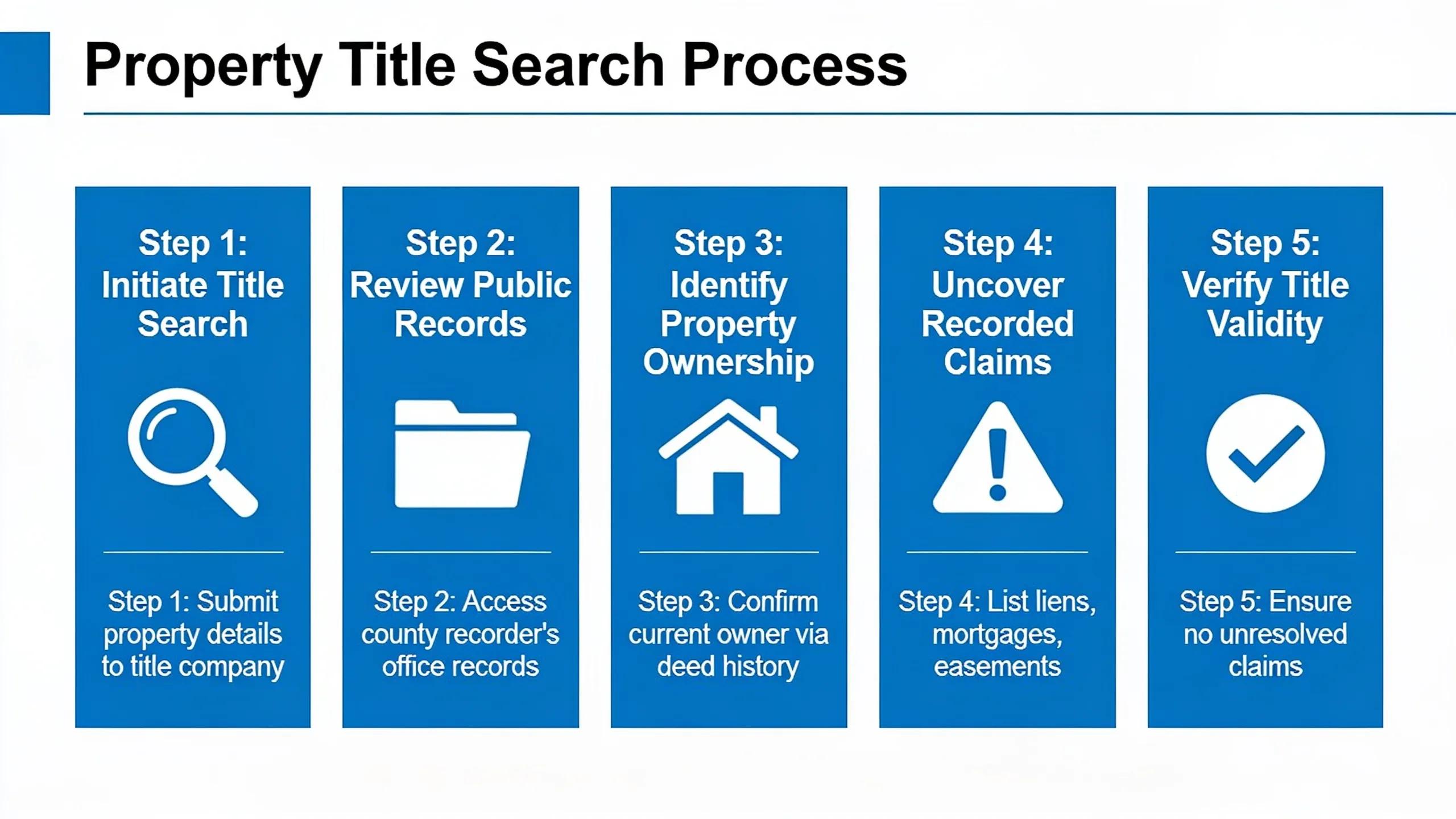
A thorough title search examines public records for deeds, mortgages, liens, judgments, easements, and probate filings before a sale closes. That review is what surfaces most defects early, giving buyers, sellers, and agents time to address them rather than discovering a cloud on the title at the closing table.
Why Does a Title Search Matter Before Closing?
A title search confirms who legally owns a property. Uncovers recorded claims that could affect a buyer or a lender. Skipping this step leaves sellers and buyers exposed to disputes that surface only after money changes hands. National data underscores how routine — and how necessary. This step has become: over a notable share of real estate transactions across the country involve a title search to confirm clear ownership, according to industry figures from the American Land Title Association. cite-3
West Virginia transactions carry their own layered risks. Contract contingencies, lender conditions, county recording practices, and title defects can all delay or derail a closing. Left unaddressed, these issues expose buyers or sellers to liability they never anticipated.
What happens if a title issue is found early?
A search completed early, before contracts tighten and deadlines loom, catches problems while there's still room to fix them. Buyers, sellers, and agents gain time to negotiate solutions rather than scramble under closing pressure.
Can a sale still move forward with a title defect?
Often, yes. A timely search doesn't just flag trouble — it points toward solutions before minor issues escalate into full-blown disputes at the closing table.
Consider what property title work typically surfaces:
Unreleased liens from prior loans or contractor disputes
Boundary or easement conflicts with neighboring parcels
Errors in prior deeds or missing signatures
Unresolved heirship or probate claims
Each item on that list can stall funding or spook a lender. Catching them early keeps a transaction on schedule and gives everyone involved. Buyer, seller, and agent alike — a clearer path to the closing table.
How Are Title Defects Resolved Before Closing?
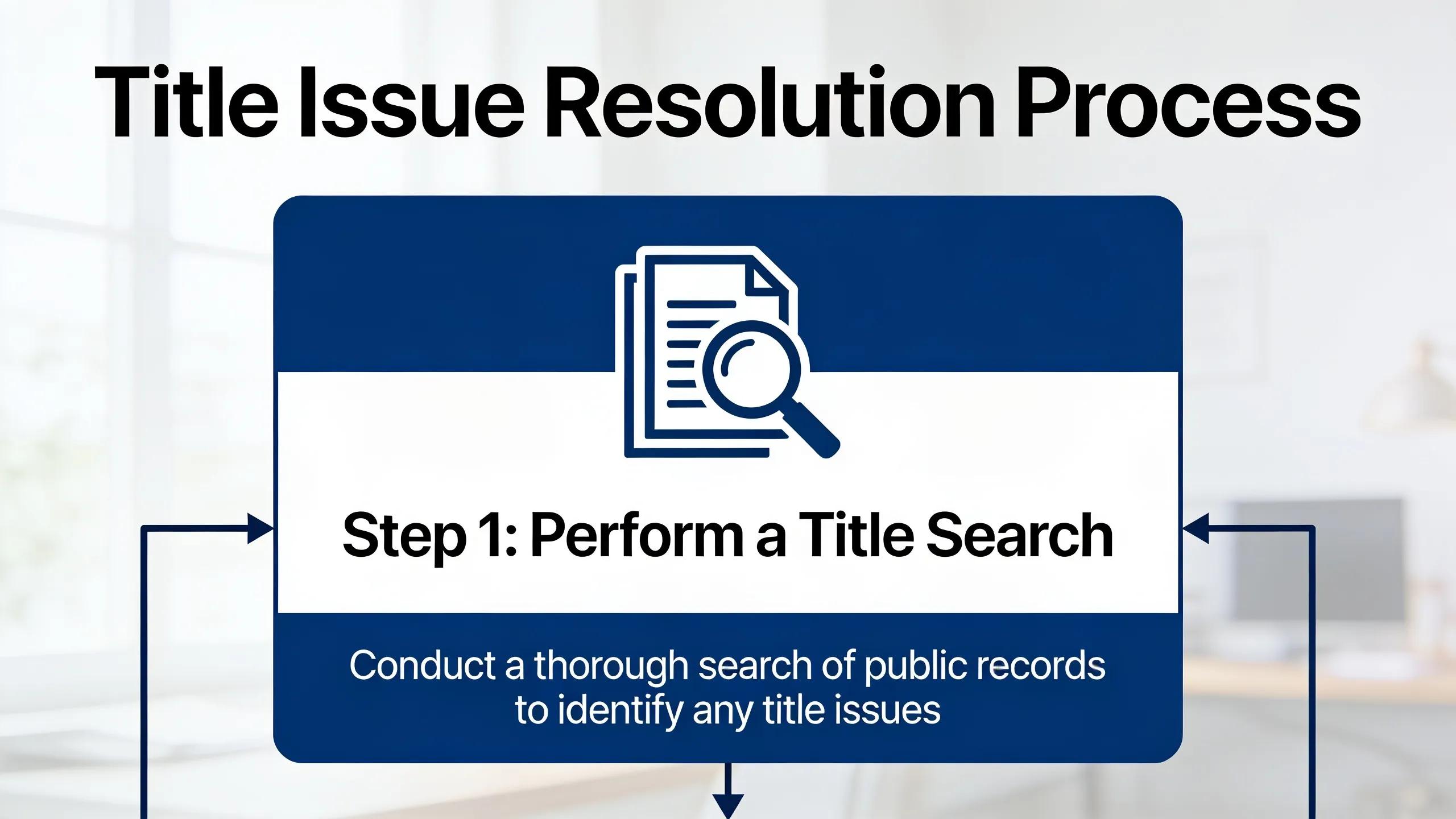
Most title defects get resolved through a sequence of steps: a thorough records review, a legal opinion on the specific problem, and a targeted fix before signing anything. A title search across county records is the starting point for sorting out ownership questions before a purchase agreement is signed. Skipping that step leaves buyers and sellers guessing about what problems actually exist.
Once a defect surfaces, a real estate attorney reads the contract, coordinates the deeper research needed on the title, and represents the client through settlement and any dispute that follows. That combination keeps a transaction on track instead of stalling at the closing table. Handling the issue alone, without that oversight, often costs more time and money later.
Can a Seller Just Patch the Problem and Move On?
Patching a title problem without proper documentation rarely holds up. A fix that looks simple at first can create bigger complications down the road. Buyers and especially lenders apply strict standards before approving a loan. A quitclaim deed signed informally, for instance, may satisfy a seller but fail a lender's underwriting review months later.
Does a Lender's Refusal Mean the Sale Is Dead?
Not necessarily. When a lender balks at a defect, that reaction usually reflects internal lending-panel rules, not a legal prohibition on selling the property. Sellers facing this situation still have paths forward, including:
Correcting the defect through proper legal filings before closing
Negotiating terms that address the lender's specific concern
Consulting counsel early enough to keep the closing date realistic
Sound property title work early in the process prevents last-minute surprises and keeps buyers, sellers, and agents aligned on what needs fixing before the deed changes hands.
When Should You Call a Real Estate Lawyer?
A title defect discovered mid-transaction calls for legal review immediately, not after closing paperwork gets signed. Waiting costs buyers negotiating leverage and leaves sellers exposed to disputes that could have been resolved earlier. A missed deadline or an unresolved lien can unravel financing at the worst possible moment.
Moye Law Office serves the Charleston area and surrounding counties, including Cabell, Kanawha, Lincoln, Mason, and Putnam, with offices located in Winfield and Cross Lanes. Clients working through an active deal in these regions have local counsel available without traveling far from the property or the closing table.
Who handles title issues at Moye Law Office?
Attorney Lisa M. Moye focuses her practice on real estate, wills and estate planning, and business law. Her work combines transactional experience with planning that keeps client interests protected long after closing day. The firm also assists clients directly with property title work, including in-house research and attorney-led closings, rather than outsourcing those steps to a third party.
When is the right moment to reach out?
Contact should happen as soon as a title search turns up a defect. A lien, missing heir, or recording error — rather than after an offer deadline passes. Real estate agents flagging an issue mid-transaction should loop in counsel the same day. Office hours run Monday through Friday, 8:30 a.m. to 4:30 p.m., with Saturday appointments available for time-sensitive matters.
FAQ
Does a title defect stop a property sale?
Title defects rarely stop a sale outright; they change the path to closing. Resolving the issue through a lien payoff, corrective deed, or title insurance endorsement keeps the transaction on schedule.
What happens when a title defect surfaces late in the process?
Delay costs money and disrupts closings. A hid

Moye Law Offices
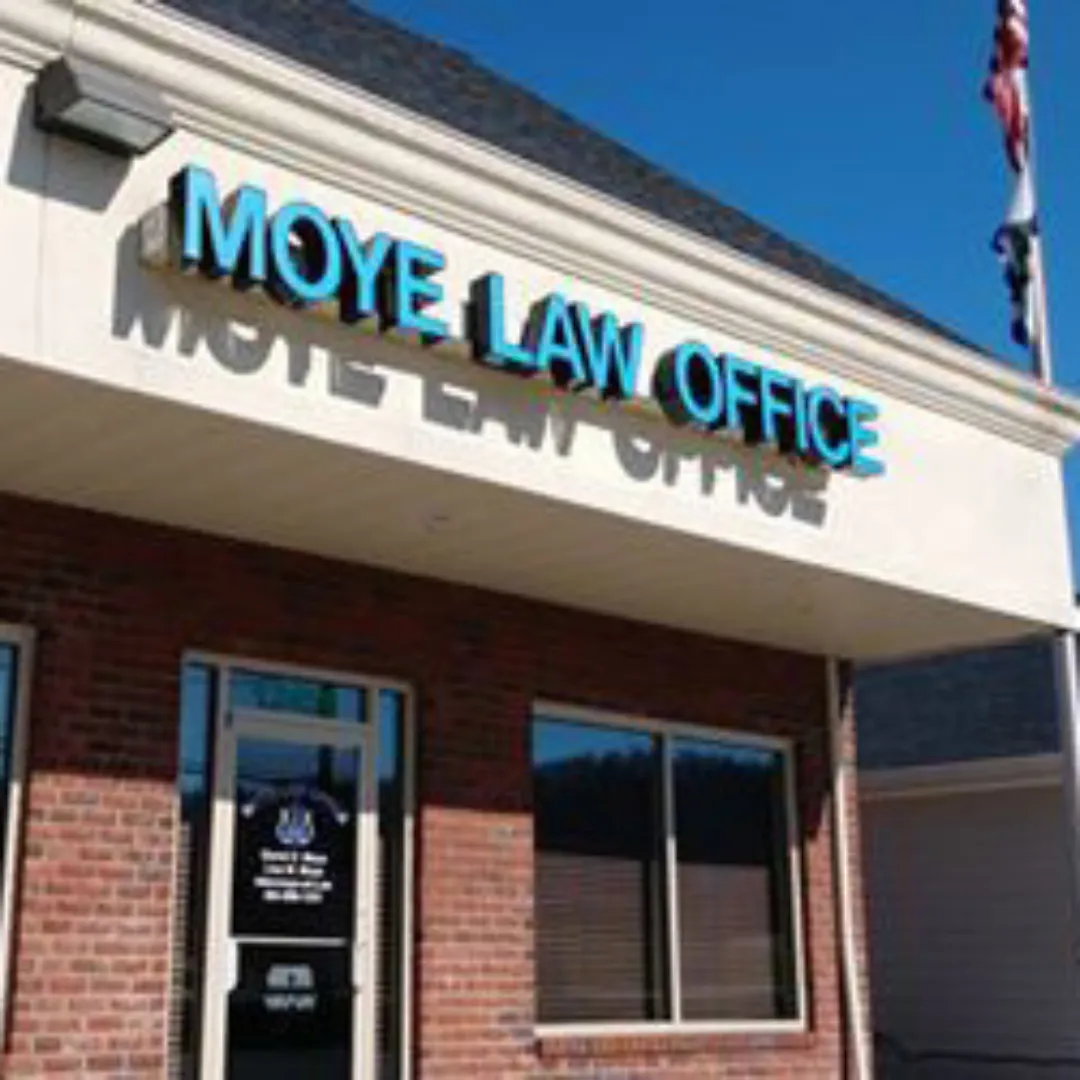
We have two offices in West Virginia: Winfield and Cross Lanes.
CROSS LANES
Property Title Work: Moving Forward With Defects
Property Title Work: Moving Forward With Defects
By Moye Law Office Editorial Team · Updated 2026-08-03
Property sales can often proceed despite title defects if the issues are resolved before closing—through a lien payoff, corrective deed, or title insurance endorsement. A title search conducted by Moye Law Office identifies potential issues early, allowing sellers to address defects and aim for a timely closing.
Key Takeaways
Title defects require forward thinking and careful consideration before proceeding with property sales.
Multiple resolution options exist for title defects, though quick solutions sometimes create larger problems later.
Title defects, despite their intimidating name, do not automatically prevent property transfers from occurring.
Moye Law Office serves Cabell, Kanawha, Lincoln, Mason, and Putnam counties for title issue resolution.
Can You Still Sell a Home With a Title Defect?
Yes, in most cases a sale can move forward even after a title defect surfaces. A missing deed, a boundary discrepancy, or a similar recorded issue rarely kills a transaction outright. It simply changes the path to closing. Buyers, sellers, and agents facing this news should treat it as a solvable puzzle rather than a dead end.
Are title defects actually common?
Title defects show up more often than most homeowners expect, and the label sounds scarier than the reality. In many instances, these issues are harmless once disclosed and resolved before the closing table. The danger comes from silence, not the defect itself — a problem addressed early rarely derails a deal. One hidden until the final signature often does.
What happens if the defect isn't caught early?
Delay costs money. A hidden lien, an unknown heir, or a surprise easement that surfaces late in the process frequently stalls a closing or drives up expenses for everyone involved. Agents watching a deal slip past its closing date. Buyers facing last-minute lender demands, know how disruptive that timing can be.
Moye Law Office manages property title work in-house, coordinating research directly rather than outsourcing it. That approach speeds up review and helps flag defects before they threaten a closing date. Handling the title search internally also means fewer handoffs and fewer chances for a problem to slip through unnoticed.
Sellers and agents facing a title defect gain the most ground by:
Disclosing the issue immediately, rather than hoping a buyer won't ask
Getting the record reviewed by counsel before a contract deadline arrives
Lining up a resolution path before the lender requests one
What Counts as a Title Defect?
A title defect is any recorded claim, gap, or error that clouds legal ownership of a property. Title, as a legal matter, refers to ownership and the bundle of rights that come with it. Not the deed document itself, which merely transfers that ownership from one party to another. When something interrupts a clean chain of ownership, a defect exists, and it can stall or sink a pending sale if left unresolved.
A property title work review typically turns up several categories of problems. Common defects include:
Outstanding mortgages or liens the seller hasn't disclosed
Unpaid judgments attached to a previous owner
Missing signatures or errors in a prior deed
Undisclosed easements granting third parties access or use rights
Probate issues, such as unresolved heirship after an owner's death
Encroachments count too, and they don't have to be dramatic. A building corner sitting a few feet onto a neighbor's registered land is enough to trigger a defect finding, even when the structure itself has stood for decades without complaint. Lenders and buyers alike want that kind of overlap clarified before money changes hands.
Does a small boundary overlap really count as a title defect?
Yes. Even a minor physical encroachment — a fence, a porch corner, a shared driveway edge. Can qualify if it crosses onto land recorded under someone else's title. These issues rarely mean the sale is doomed, but they do require documentation and often a formal resolution before closing.
How do buyers and agents find out about these problems?
A thorough title search examines public records for deeds, mortgages, liens, judgments, easements, and probate filings before a sale closes. That review is what surfaces most defects early, giving buyers, sellers, and agents time to address them rather than discovering a cloud on the title at the closing table.
Why Does a Title Search Matter Before Closing?
A title search confirms who legally owns a property. Uncovers recorded claims that could affect a buyer or a lender. Skipping this step leaves sellers and buyers exposed to disputes that surface only after money changes hands. National data underscores how routine — and how necessary. This step has become: over a notable share of real estate transactions across the country involve a title search to confirm clear ownership, according to industry figures from the American Land Title Association. cite-3
West Virginia transactions carry their own layered risks. Contract contingencies, lender conditions, county recording practices, and title defects can all delay or derail a closing. Left unaddressed, these issues expose buyers or sellers to liability they never anticipated.
What happens if a title issue is found early?
A search completed early, before contracts tighten and deadlines loom, catches problems while there's still room to fix them. Buyers, sellers, and agents gain time to negotiate solutions rather than scramble under closing pressure.
Can a sale still move forward with a title defect?
Often, yes. A timely search doesn't just flag trouble — it points toward solutions before minor issues escalate into full-blown disputes at the closing table.
Consider what property title work typically surfaces:
Unreleased liens from prior loans or contractor disputes
Boundary or easement conflicts with neighboring parcels
Errors in prior deeds or missing signatures
Unresolved heirship or probate claims
Each item on that list can stall funding or spook a lender. Catching them early keeps a transaction on schedule and gives everyone involved. Buyer, seller, and agent alike — a clearer path to the closing table.
How Are Title Defects Resolved Before Closing?
Most title defects get resolved through a sequence of steps: a thorough records review, a legal opinion on the specific problem, and a targeted fix before signing anything. A title search across county records is the starting point for sorting out ownership questions before a purchase agreement is signed. Skipping that step leaves buyers and sellers guessing about what problems actually exist.
Once a defect surfaces, a real estate attorney reads the contract, coordinates the deeper research needed on the title, and represents the client through settlement and any dispute that follows. That combination keeps a transaction on track instead of stalling at the closing table. Handling the issue alone, without that oversight, often costs more time and money later.
Can a Seller Just Patch the Problem and Move On?
Patching a title problem without proper documentation rarely holds up. A fix that looks simple at first can create bigger complications down the road. Buyers and especially lenders apply strict standards before approving a loan. A quitclaim deed signed informally, for instance, may satisfy a seller but fail a lender's underwriting review months later.
Does a Lender's Refusal Mean the Sale Is Dead?
Not necessarily. When a lender balks at a defect, that reaction usually reflects internal lending-panel rules, not a legal prohibition on selling the property. Sellers facing this situation still have paths forward, including:
Correcting the defect through proper legal filings before closing
Negotiating terms that address the lender's specific concern
Consulting counsel early enough to keep the closing date realistic
Sound property title work early in the process prevents last-minute surprises and keeps buyers, sellers, and agents aligned on what needs fixing before the deed changes hands.
When Should You Call a Real Estate Lawyer?
A title defect discovered mid-transaction calls for legal review immediately, not after closing paperwork gets signed. Waiting costs buyers negotiating leverage and leaves sellers exposed to disputes that could have been resolved earlier. A missed deadline or an unresolved lien can unravel financing at the worst possible moment.
Moye Law Office serves the Charleston area and surrounding counties, including Cabell, Kanawha, Lincoln, Mason, and Putnam, with offices located in Winfield and Cross Lanes. Clients working through an active deal in these regions have local counsel available without traveling far from the property or the closing table.
Who handles title issues at Moye Law Office?
Attorney Lisa M. Moye focuses her practice on real estate, wills and estate planning, and business law. Her work combines transactional experience with planning that keeps client interests protected long after closing day. The firm also assists clients directly with property title work, including in-house research and attorney-led closings, rather than outsourcing those steps to a third party.
When is the right moment to reach out?
Contact should happen as soon as a title search turns up a defect. A lien, missing heir, or recording error — rather than after an offer deadline passes. Real estate agents flagging an issue mid-transaction should loop in counsel the same day. Office hours run Monday through Friday, 8:30 a.m. to 4:30 p.m., with Saturday appointments available for time-sensitive matters.
FAQ
Does a title defect stop a property sale?
Title defects rarely stop a sale outright; they change the path to closing. Resolving the issue through a lien payoff, corrective deed, or title insurance endorsement keeps the transaction on schedule.
What happens when a title defect surfaces late in the process?
Delay costs money and disrupts closings. A hid
Moye Law Offices
We have two offices in West Virginia:
Winfield and Cross Lanes.
CROSS LANES
We Are Here To Help
Do you have a query or problem that you would like to talk about, or are you curious to hear more about how we can help you?
Get in touch today! We look forward to hearing from you.
Assistance Hours
Monday – Friday: 8:30am – 4:30pm
Saturday: By appointment only
Sunday: CLOSED
Subscribe to our Newsletter
We Are Here To Help
Do you have a query or problem that you would like to talk about, or are you curious to hear more about how we can help you?
Get in touch today! We look forward to hearing from you.
Assistance Hours
Monday – Friday 8:30am – 4:30pm
Saturday: By appointment only
Sunday CLOSED