
Blog

Blog

Uncover Your Property’s Past: Insights from Title Records WV
What a Title Search Can Reveal About Your Property’s Past: Understanding Property History and Common Title Issues
A title search is a systematic review of public records that reconstructs a property's legal history and exposes any claims, restrictions, or gaps that could affect ownership. This process traces deeds, mortgages, liens, recorded plats, and judgments to tell the story of a parcel—who owned it, what encumbrances burden it, and whether recorded documents match the physical boundaries. Understanding property title history protects buyers and owners from unexpected financial liability, use restrictions, or ownership disputes that can cloud value and delay transfers. In this article you will learn what a title search uncovers, the most common title issues in West Virginia, how undisclosed heirs and boundary conflicts appear in records, and the legal remedies available when defects surface. Early in the process, localized expertise matters: MOYE Law office, with in-house title research capabilities and community ties in Winfield and Cross Lanes, can assist clients who need deeper review or next-step legal action. The sections that follow explain the mechanics of a title search, common red flags in WV records, practical protections for buyers, and how to proceed when a search reveals problems.
What a Title Search Reveals: Reconstructing Property History and Identifying Encumbrances
A title search is a systematic review of public records that reconstructs a property's legal history and exposes any claims, restrictions, or encumbrances that could affect ownership. This process traces deeds, mortgages, liens, recorded plats, and judgments to delineate a parcel's history—identifying previous owners, existing encumbrances, and verifying alignment between recorded documents and physical boundaries.
Defects in Titles to Real Estate and the Remedies, 1935
What Does a Title Search Uncover About Your Property’s History?
A title search compiles recorded instruments to define ownership, encumbrances, and legal limitations affecting a property, using county clerk and recorder indexes as primary sources. The mechanism is straightforward: examiners read grantor/grantee indices, deed recordings, mortgages, releases, plats, and recorded judgments to assemble the chain of title and identify recorded encumbrances that survive conveyances. The specific benefit to an owner or buyer is clarity—knowing past owners, outstanding liens, easements, or restrictive covenants before closing prevents surprises that could reduce value or impair use. Below is a concise list of the most common revelations a search returns and why each matters for decision-making.
A title search typically reveals the following key historical elements:
Past owners and conveyance dates, which establish chain of title and detect gaps in ownership history.
Recorded liens and mortgages, which indicate financial claims that must be satisfied or subordinated at transfer.
Easements, rights-of-way, and restrictive covenants, which limit how the property can be used or developed.
Recorded plats, surveys, and metes-and-bounds descriptions, which inform boundary disputes and physical layout.
These recorded items directly inform the next steps—whether a buyer needs title insurance, a boundary survey, or legal filings to clear title—so the search shapes both risk assessment and remedial strategy.
What Is a Title Search and Why Is It Important?
A title search is the legal diligence step that verifies who owns a property and what recorded claims affect it by consulting public land records at county offices and digital repositories. Examiners look for deeds, mortgages, releases, tax statements, and recorded court judgments to confirm that the seller can convey clear title and to spot encumbrances that survive a sale. The importance lies in prevention: buyers who skip a thorough title search risk inheriting mechanic's liens, unpaid taxes, or recorded easements that can restrict use or trigger unexpected costs. Understanding the search process also guides practical choices—whether to require lien payoffs, negotiate price adjustments, or pursue a corrective recording before closing.
Understanding Title Defects: Defining a Material Defect in Real Estate Transactions
A material defect in a property's title is one that raises reasonable doubt regarding the vendor's ability to convey a title acceptable to a prudent purchaser. Such a title defect is a matter of fact, not of law.
Title Examination in Virginia, 1982
How Does a Title Search Reveal Past Ownership and Property Records?
Reconstructing a chain of title relies on linking grantor/grantee entries across successive conveyances and interpreting recorded instruments like deeds and probate filings to map ownership transfers. The mechanism involves tracing each transfer backward to a root of title and noting any interruptions such as unrecorded conveyances, clerical errors, or ambiguous descriptions; these interruptions create potential clouds. For example, a gap where a deed references an old metes-and-bounds description that does not match a later plat can signal a boundary inconsistency worth resolving with a survey. Where older records are incomplete, examiners may rely on secondary sources or probate records to fill in missing links while flagging areas that may require legal resolution.
What Are the Most Common Property Title Issues Found in West Virginia?
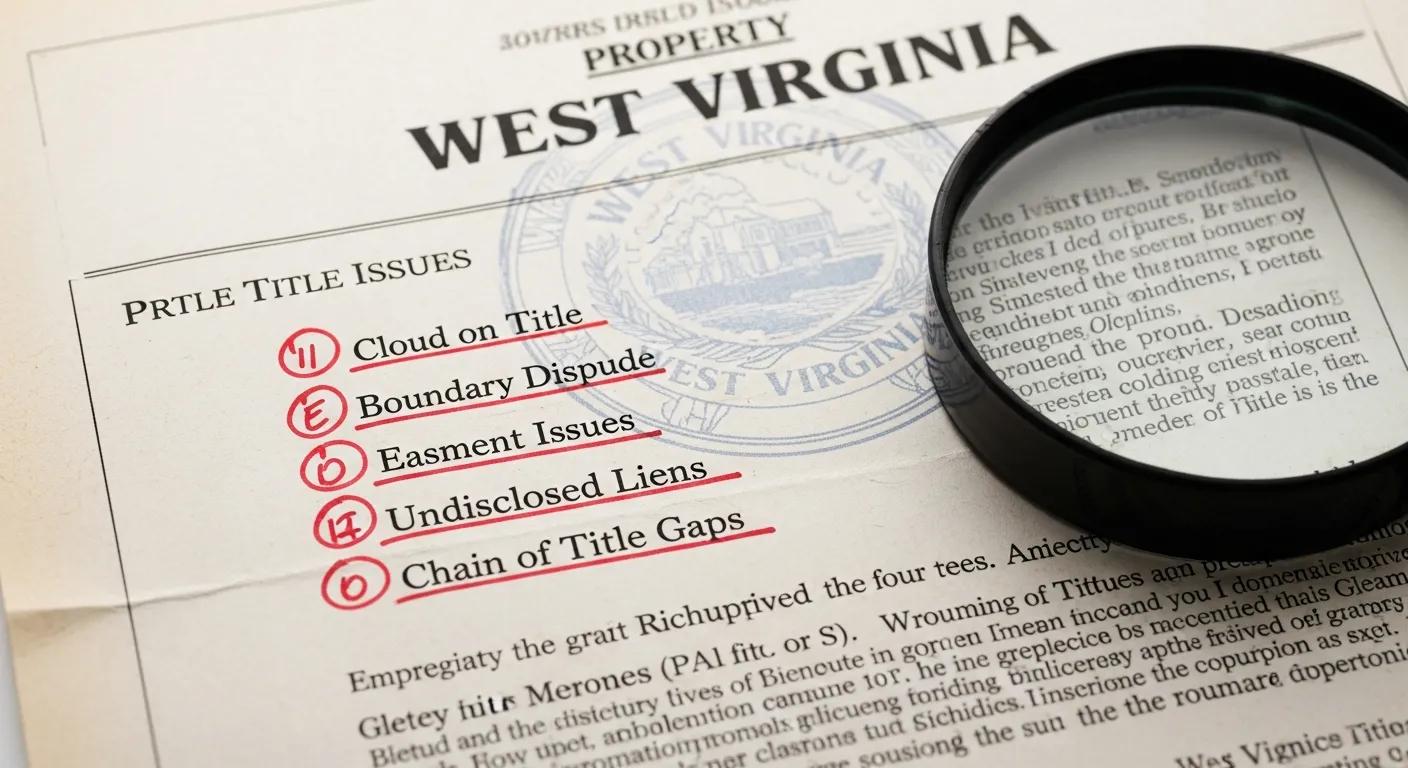
Title searches in West Virginia often surface a predictable set of defects and encumbrances rooted in both modern transactions and historical record-keeping quirks. Common issues combine financial claims, recorded restrictions, and clerical or succession problems that can cloud title or limit how a property is used. The reason these matters recur in WV is practical: many rural parcels have layered deeds, occasional unrecorded transfers in family successions, and older surveys that conflict with newer plats. Understanding how each issue appears in records and the typical remedies helps buyers and owners prioritize actions that protect value and clear title.
Before the EAV table, here is a brief explanation: the table below summarizes frequent title defects, how they show up in public records, and practical legal responses to resolve or mitigate their impacts.
Title IssueHow It Appears in RecordsPotential Impact / RemedyTax lienRecorded lien or delinquent tax notice in county clerk recordsCan obligate buyer to pay or require lien release; remedy: payoff or negotiated prorateMechanic's lienRecorded lien from contractor or subcontractor with filing datesCan survive transfer until released; remedy: demand release, bond, or satisfy lienJudgment lienCourt judgment recorded against a granteeEncumbers title until satisfied or subordinated; remedy: satisfy judgment or negotiate settlementEasement (utility/access)Recorded easement instrument or reference on a platMay limit use or require access allowances; remedy: easement termination, relocation agreement, or acceptanceRestrictive covenantDeed language or recorded declaration limiting useRestricts development; remedy: amendment agreement among parties or legal challenge in limited cases
This comparison clarifies common defects and the practical responses typically required to restore marketable title; buyers should expect to resolve recorded encumbrances before or at closing.
Common Title Defects and Their Detection Through Title Searches
Numerous and diverse problems can arise when common title defects are not identified during a title search. The title examiner must possess awareness of these issues and understand the methodologies for their avoidance.
Limits of Title Search Under the West Virginia Recording Act, 1954
How Do Liens and Encumbrances Affect Property Titles?
Liens and encumbrances are recorded legal claims that attach to property and can create financial obligations or transfer obstacles by surviving conveyance until cleared. Types include tax liens, mechanic's liens from construction work, and judgment liens arising from court actions; each is recorded in the county land records and flags potential liability to anyone acquiring the property. The practical impact can range from delayed closings to post-purchase exposure if liens are missed, so resolving them through payoff, release, or subordination is essential. In many WV transactions, lenders and sellers negotiate lien satisfaction or require escrow arrangements; when negotiation fails, legal remedies such as lien release actions or bonding may be needed to protect a new owner.
What Easements and Rights-of-Way Can a Title Search Reveal?
A title search commonly discloses easements—legal permissions allowing another party to use part of a property for a specific purpose—such as utility easements, access easements for shared drives, and prescriptive rights acquired through long-term use. These appear as dedicated easement instruments, references on recorded plats, or occasional court determinations in the chain of title; their scope and terms are critical for assessing how they affect property use. Easements can restrict development, require maintenance obligations, or grant perpetual access to third parties, which influences property value and permissible projects. Resolving undesirable easements may involve negotiation for modification, vacation procedures where available, or a legal challenge where improper recording or abandonment can be established.
How Can Undisclosed Heirs and Ownership Disputes Impact Your Property’s Title?
Undisclosed heirs and ownership disputes pose a distinct risk because they introduce competing claims that may surface years after a sale or inheritance, often stemming from incomplete probate, ambiguous wills, or overlooked family transfers. The mechanism is that an heir who was not included in a probate proceeding or whose interest was not recorded may later assert ownership, producing a cloud on title that buyers and lenders find unacceptable. The consequence can be litigation, rescission claims, or the need for quiet title actions to extinguish competing interests; these remedies can be time-consuming and expensive. Understanding how such claims originate and the typical legal responses helps property owners secure title proactively and reduce exposure to late-emerging disputes.
Claims arising from forgotten heirs usually follow a pattern: an estate passed informally or by deed without full probate, and a relative later produces evidence of inheritance interest. The practical remedy often involves corrective probate, a quiet title action to ask a court to declare title clear, or negotiated settlement where heirs accept compensation. Because statutes of limitation and probate rules vary by circumstance, early identification of potential heir claims through title research and probate record review is the most reliable way to limit the risk of later disruptions.
What Are Forgotten Heirs and How Do They Affect Property Ownership?
Forgotten heirs are individuals entitled to inherit under probate rules who were omitted from estate administration or whose claims were never recorded, and they can disrupt previously accepted title by asserting ownership later. They typically appear when a descendant, spouse, or collateral relative produces evidence showing they had an inheritance right that was not addressed in a recorded probate or conveyance, causing a cloud on title. The legal responses include reopening probate to correct distributions, executing corrective deeds, or filing a quiet title action to obtain a judicial declaration that clarifies ownership. Resolving such claims early reduces the potential for long-term disruptions and commonly requires both factual investigation into family history and careful legal pleadings.
How Are Boundary Disputes and Property Line Conflicts Identified Through Title Searches?

Boundary disputes often surface in title work when recorded surveys, plats, or metes-and-bounds descriptions conflict with each other or with observed physical conditions on the ground, creating ambiguity about exact lines. Title examiners flag inconsistent descriptions, references to old monuments that no longer exist, or overlapping deed descriptions; these record-based signals indicate the need for a current boundary survey and possibly agreement among neighbors. The practical pathway to resolution typically begins with a licensed surveyor who produces an updated plat, followed by negotiation, boundary line agreements, or if necessary, litigation to resolve adverse possession or meet-and-bound issues. Early detection through title research focuses efforts and keeps disputes from derailing transactions.
How Does a Title Search Protect Your Investment When Buying a Home in West Virginia?
A title search mitigates risk by revealing recorded claims and defects before purchase, enabling buyers to demand clearance, require seller cure, obtain appropriate title insurance coverage, or walk away from unacceptable risks. The mechanism is preventive: identifying liens, easements, or succession questions prior to closing lets parties allocate responsibility and avoid inheriting problems. Title searches work best in tandem with title insurance and legal review—searches find recorded issues, while insurance protects against certain unknown or missed matters that surface after closing. For a buyer, the most practical benefits are informed negotiation power, clearer cost forecasting, and faster closings when defects are addressed early.
Below is a compact comparison of protective measures buyers typically consider after a title search, showing when each is used and the benefit or limitation.
Protective MeasureWhen It's UsedBenefit / LimitationTitle searchBefore contract closingIdentifies recorded issues; limitation is it cannot reveal unrecorded claimsTitle insuranceAt or before closingProtects against covered post-closing losses for insured matters; limitation is policy exceptions and exclusionsQuiet title actionWhen ownership cloud existsJudicial remedy to clear competing claims; limitation is time and litigation cost
The comparison demonstrates that a title search is the discovery tool, title insurance offers financial protection for certain risks, and quiet title actions are legal tools to resolve intractable ownership clouds.
Why Is Title Insurance Important After a Title Search?
Title insurance complements a title search by protecting the insured party against certain covered losses that arise after closing, including some defects the search missed or matters not evident in public records. The mechanism: insurers underwrite the search and assume financial responsibility for specific risks listed in the policy, while typical exclusions may include unrecorded easements or matters known to the insured. The benefit is monetary protection and defense against covered claims, but buyers should understand limitations—insurance does not fix legal defects that require correction via court orders, nor does it replace the need for a careful search and legal review. When significant defects are flagged, insurance can be required by lenders or negotiated as part of the purchase to reduce post-closing exposure.
What Legal Remedies Exist for Resolving Title Defects?
Legal remedies for title defects include corrective recordings, lien release actions, quiet title suits, and negotiated settlements; each remedy addresses specific defect types and carries different timelines and costs. A quiet title action asks a court to declare who holds valid title and to extinguish competing claims, making it the definitive judicial remedy to clear a cloud; corrective recordings fix clerical errors or clarify ambiguous instrument language. Lien releases and bonding procedures can remove recorded financial encumbrances, while sometimes negotiated compromises among claimants provide the most efficient path. Choosing the appropriate remedy depends on defect type, evidentiary strength, and the owner’s tolerance for litigation versus settlement.
At the end of this process, practical next steps for buyers commonly include obtaining a current survey, requiring seller-provided lien releases at closing, and purchasing title insurance to secure financial protection—measures that, together with legal guidance, implement protections discovered in a title search.
How Does MOYE Law Office Support You in Understanding and Resolving Title Issues?
MOYE Law office provides localized legal support and in-house title research to help clients interpret search results, prioritize risks, and pursue corrective measures when necessary. The firm’s practical strength lies in blending record review with legal analysis to recommend whether a matter is resolvable through recording corrections, negotiation, or litigation, and to identify the most cost-effective path for preserving property value. Attorney J. Scott Moye brings focused real estate law experience and community ties to this work, assisting clients with title review, Quiet Title strategy, and coordination with surveyors and county clerks. For property owners or buyers in Winfield, Cross Lanes, and surrounding areas, MOYE Law office offers consultations to map next steps and to help implement protective actions tailored to the case.
What Is Attorney Lisa M. Moye’s Role in Real Estate Title Research?
Attorney Lisa M. Moye specializes in Real Estate Law and Wills and Estates and oversees in-house title research efforts that support case strategy and transactional work. Her role includes supervising the examination of deeds, probate records, and estate-related instruments that often intersect with property claims, and advising on corrective probate or deed strategies when inheritance issues arise. Local involvement and leadership roles in the legal community reinforce practical familiarity with county procedures, which benefits clients needing precise filings or negotiation with local stakeholders. This combined legal and procedural perspective ensures title problems are addressed with both technical accuracy and community-aware approaches.
How Can You Schedule a Consultation for Title Search Assistance?
To schedule title search assistance, prospective clients should prepare key documents—such as the current deed, purchase contract, tax statements, and any available survey—and request a consultation through the MOYE Law office website or by contacting the firm directly using listed business channels. During an initial consultation the attorney will review the materials, summarize the title search findings, outline possible remedies (for example, lien release, corrective recording, quiet title), and recommend next steps including cost estimates and timelines. Bringing documents upfront accelerates analysis and helps the attorney prioritize urgent issues, so preparing these items in advance leads to a more productive meeting. After the consult, the firm can perform in-house research and coordinate with title examiners or surveyors as needed to move toward resolution.
What Are Frequently Asked Questions About Title Searches in West Virginia?
Below are concise answers to common questions buyers and owners ask about title searches in West Virginia, aimed at clarifying timelines, differences between services, and practical next steps. Each answer highlights how record availability and local county practices influence results, and points toward procedural remedies when searches find defects.
How Far Back Does a Title Search Go in West Virginia?
A practical title search typically goes back as far as necessary to establish a clear chain of title—often to a recorded root of title or several decades depending on the property’s history and county record completeness. Examiners try to reach a conclusive series of conveyances that link the current owner to a prior valid instrument, but older gaps or missing recordings can limit the depth of reconstruction. Factors that influence lookback include destroyed records, unrecorded family transfers, and the age of the parcel; when records are incomplete a combination of probate searches and additional documentary evidence may be used to bridge the gap.
What Are the Differences Between a Title Search and Title Insurance?
A title search is a factual examination of recorded instruments to identify existing recorded claims; title insurance is a contractual product that provides financial protection against certain covered title defects discovered after closing. The practical difference is that a search discovers what is recorded and flags areas needing correction, while insurance underwrites specific risks and pays for covered losses or defense costs if a covered problem emerges post-closing. Both are complementary: a search reduces risk by enabling resolution prior to purchase, and insurance transfers certain remaining financial risk to an insurer for the policy period.
Understanding Records: A title search reveals recorded instruments and potential defects.
Risk Transfer: Title insurance transfers specified financial risk to a insurer for covered matters.
Combined Use: Using both protects buyers—search for detection and insurance for residual covered risk.
These concise comparisons help buyers decide what combination of search, legal review, and insurance best fits their transaction and risk tolerance.

Moye Law Offices
We have two offices in West Virginia: Winfield and Cross Lanes.

CROSS LANES
Uncover Your Property’s Past: Insights from Title Records WV
What a Title Search Can Reveal About Your Property’s Past: Understanding Property History and Common Title Issues
A title search is a systematic review of public records that reconstructs a property's legal history and exposes any claims, restrictions, or gaps that could affect ownership. This process traces deeds, mortgages, liens, recorded plats, and judgments to tell the story of a parcel—who owned it, what encumbrances burden it, and whether recorded documents match the physical boundaries. Understanding property title history protects buyers and owners from unexpected financial liability, use restrictions, or ownership disputes that can cloud value and delay transfers. In this article you will learn what a title search uncovers, the most common title issues in West Virginia, how undisclosed heirs and boundary conflicts appear in records, and the legal remedies available when defects surface. Early in the process, localized expertise matters: MOYE Law office, with in-house title research capabilities and community ties in Winfield and Cross Lanes, can assist clients who need deeper review or next-step legal action. The sections that follow explain the mechanics of a title search, common red flags in WV records, practical protections for buyers, and how to proceed when a search reveals problems.
What a Title Search Reveals: Reconstructing Property History and Identifying Encumbrances
A title search is a systematic review of public records that reconstructs a property's legal history and exposes any claims, restrictions, or encumbrances that could affect ownership. This process traces deeds, mortgages, liens, recorded plats, and judgments to delineate a parcel's history—identifying previous owners, existing encumbrances, and verifying alignment between recorded documents and physical boundaries.
Defects in Titles to Real Estate and the Remedies, 1935
What Does a Title Search Uncover About Your Property’s History?
A title search compiles recorded instruments to define ownership, encumbrances, and legal limitations affecting a property, using county clerk and recorder indexes as primary sources. The mechanism is straightforward: examiners read grantor/grantee indices, deed recordings, mortgages, releases, plats, and recorded judgments to assemble the chain of title and identify recorded encumbrances that survive conveyances. The specific benefit to an owner or buyer is clarity—knowing past owners, outstanding liens, easements, or restrictive covenants before closing prevents surprises that could reduce value or impair use. Below is a concise list of the most common revelations a search returns and why each matters for decision-making.
A title search typically reveals the following key historical elements:
Past owners and conveyance dates, which establish chain of title and detect gaps in ownership history.
Recorded liens and mortgages, which indicate financial claims that must be satisfied or subordinated at transfer.
Easements, rights-of-way, and restrictive covenants, which limit how the property can be used or developed.
Recorded plats, surveys, and metes-and-bounds descriptions, which inform boundary disputes and physical layout.
These recorded items directly inform the next steps—whether a buyer needs title insurance, a boundary survey, or legal filings to clear title—so the search shapes both risk assessment and remedial strategy.
What Is a Title Search and Why Is It Important?
A title search is the legal diligence step that verifies who owns a property and what recorded claims affect it by consulting public land records at county offices and digital repositories. Examiners look for deeds, mortgages, releases, tax statements, and recorded court judgments to confirm that the seller can convey clear title and to spot encumbrances that survive a sale. The importance lies in prevention: buyers who skip a thorough title search risk inheriting mechanic's liens, unpaid taxes, or recorded easements that can restrict use or trigger unexpected costs. Understanding the search process also guides practical choices—whether to require lien payoffs, negotiate price adjustments, or pursue a corrective recording before closing.
Understanding Title Defects: Defining a Material Defect in Real Estate Transactions
A material defect in a property's title is one that raises reasonable doubt regarding the vendor's ability to convey a title acceptable to a prudent purchaser. Such a title defect is a matter of fact, not of law.
Title Examination in Virginia, 1982
How Does a Title Search Reveal Past Ownership and Property Records?
Reconstructing a chain of title relies on linking grantor/grantee entries across successive conveyances and interpreting recorded instruments like deeds and probate filings to map ownership transfers. The mechanism involves tracing each transfer backward to a root of title and noting any interruptions such as unrecorded conveyances, clerical errors, or ambiguous descriptions; these interruptions create potential clouds. For example, a gap where a deed references an old metes-and-bounds description that does not match a later plat can signal a boundary inconsistency worth resolving with a survey. Where older records are incomplete, examiners may rely on secondary sources or probate records to fill in missing links while flagging areas that may require legal resolution.
What Are the Most Common Property Title Issues Found in West Virginia?
Title searches in West Virginia often surface a predictable set of defects and encumbrances rooted in both modern transactions and historical record-keeping quirks. Common issues combine financial claims, recorded restrictions, and clerical or succession problems that can cloud title or limit how a property is used. The reason these matters recur in WV is practical: many rural parcels have layered deeds, occasional unrecorded transfers in family successions, and older surveys that conflict with newer plats. Understanding how each issue appears in records and the typical remedies helps buyers and owners prioritize actions that protect value and clear title.
Before the EAV table, here is a brief explanation: the table below summarizes frequent title defects, how they show up in public records, and practical legal responses to resolve or mitigate their impacts.
Title IssueHow It Appears in RecordsPotential Impact / RemedyTax lienRecorded lien or delinquent tax notice in county clerk recordsCan obligate buyer to pay or require lien release; remedy: payoff or negotiated prorateMechanic's lienRecorded lien from contractor or subcontractor with filing datesCan survive transfer until released; remedy: demand release, bond, or satisfy lienJudgment lienCourt judgment recorded against a granteeEncumbers title until satisfied or subordinated; remedy: satisfy judgment or negotiate settlementEasement (utility/access)Recorded easement instrument or reference on a platMay limit use or require access allowances; remedy: easement termination, relocation agreement, or acceptanceRestrictive covenantDeed language or recorded declaration limiting useRestricts development; remedy: amendment agreement among parties or legal challenge in limited cases
This comparison clarifies common defects and the practical responses typically required to restore marketable title; buyers should expect to resolve recorded encumbrances before or at closing.
Common Title Defects and Their Detection Through Title Searches
Numerous and diverse problems can arise when common title defects are not identified during a title search. The title examiner must possess awareness of these issues and understand the methodologies for their avoidance.
Limits of Title Search Under the West Virginia Recording Act, 1954
How Do Liens and Encumbrances Affect Property Titles?
Liens and encumbrances are recorded legal claims that attach to property and can create financial obligations or transfer obstacles by surviving conveyance until cleared. Types include tax liens, mechanic's liens from construction work, and judgment liens arising from court actions; each is recorded in the county land records and flags potential liability to anyone acquiring the property. The practical impact can range from delayed closings to post-purchase exposure if liens are missed, so resolving them through payoff, release, or subordination is essential. In many WV transactions, lenders and sellers negotiate lien satisfaction or require escrow arrangements; when negotiation fails, legal remedies such as lien release actions or bonding may be needed to protect a new owner.
What Easements and Rights-of-Way Can a Title Search Reveal?
A title search commonly discloses easements—legal permissions allowing another party to use part of a property for a specific purpose—such as utility easements, access easements for shared drives, and prescriptive rights acquired through long-term use. These appear as dedicated easement instruments, references on recorded plats, or occasional court determinations in the chain of title; their scope and terms are critical for assessing how they affect property use. Easements can restrict development, require maintenance obligations, or grant perpetual access to third parties, which influences property value and permissible projects. Resolving undesirable easements may involve negotiation for modification, vacation procedures where available, or a legal challenge where improper recording or abandonment can be established.
How Can Undisclosed Heirs and Ownership Disputes Impact Your Property’s Title?
Undisclosed heirs and ownership disputes pose a distinct risk because they introduce competing claims that may surface years after a sale or inheritance, often stemming from incomplete probate, ambiguous wills, or overlooked family transfers. The mechanism is that an heir who was not included in a probate proceeding or whose interest was not recorded may later assert ownership, producing a cloud on title that buyers and lenders find unacceptable. The consequence can be litigation, rescission claims, or the need for quiet title actions to extinguish competing interests; these remedies can be time-consuming and expensive. Understanding how such claims originate and the typical legal responses helps property owners secure title proactively and reduce exposure to late-emerging disputes.
Claims arising from forgotten heirs usually follow a pattern: an estate passed informally or by deed without full probate, and a relative later produces evidence of inheritance interest. The practical remedy often involves corrective probate, a quiet title action to ask a court to declare title clear, or negotiated settlement where heirs accept compensation. Because statutes of limitation and probate rules vary by circumstance, early identification of potential heir claims through title research and probate record review is the most reliable way to limit the risk of later disruptions.
What Are Forgotten Heirs and How Do They Affect Property Ownership?
Forgotten heirs are individuals entitled to inherit under probate rules who were omitted from estate administration or whose claims were never recorded, and they can disrupt previously accepted title by asserting ownership later. They typically appear when a descendant, spouse, or collateral relative produces evidence showing they had an inheritance right that was not addressed in a recorded probate or conveyance, causing a cloud on title. The legal responses include reopening probate to correct distributions, executing corrective deeds, or filing a quiet title action to obtain a judicial declaration that clarifies ownership. Resolving such claims early reduces the potential for long-term disruptions and commonly requires both factual investigation into family history and careful legal pleadings.
How Are Boundary Disputes and Property Line Conflicts Identified Through Title Searches?
Boundary disputes often surface in title work when recorded surveys, plats, or metes-and-bounds descriptions conflict with each other or with observed physical conditions on the ground, creating ambiguity about exact lines. Title examiners flag inconsistent descriptions, references to old monuments that no longer exist, or overlapping deed descriptions; these record-based signals indicate the need for a current boundary survey and possibly agreement among neighbors. The practical pathway to resolution typically begins with a licensed surveyor who produces an updated plat, followed by negotiation, boundary line agreements, or if necessary, litigation to resolve adverse possession or meet-and-bound issues. Early detection through title research focuses efforts and keeps disputes from derailing transactions.
How Does a Title Search Protect Your Investment When Buying a Home in West Virginia?
A title search mitigates risk by revealing recorded claims and defects before purchase, enabling buyers to demand clearance, require seller cure, obtain appropriate title insurance coverage, or walk away from unacceptable risks. The mechanism is preventive: identifying liens, easements, or succession questions prior to closing lets parties allocate responsibility and avoid inheriting problems. Title searches work best in tandem with title insurance and legal review—searches find recorded issues, while insurance protects against certain unknown or missed matters that surface after closing. For a buyer, the most practical benefits are informed negotiation power, clearer cost forecasting, and faster closings when defects are addressed early.
Below is a compact comparison of protective measures buyers typically consider after a title search, showing when each is used and the benefit or limitation.
Protective MeasureWhen It's UsedBenefit / LimitationTitle searchBefore contract closingIdentifies recorded issues; limitation is it cannot reveal unrecorded claimsTitle insuranceAt or before closingProtects against covered post-closing losses for insured matters; limitation is policy exceptions and exclusionsQuiet title actionWhen ownership cloud existsJudicial remedy to clear competing claims; limitation is time and litigation cost
The comparison demonstrates that a title search is the discovery tool, title insurance offers financial protection for certain risks, and quiet title actions are legal tools to resolve intractable ownership clouds.
Why Is Title Insurance Important After a Title Search?
Title insurance complements a title search by protecting the insured party against certain covered losses that arise after closing, including some defects the search missed or matters not evident in public records. The mechanism: insurers underwrite the search and assume financial responsibility for specific risks listed in the policy, while typical exclusions may include unrecorded easements or matters known to the insured. The benefit is monetary protection and defense against covered claims, but buyers should understand limitations—insurance does not fix legal defects that require correction via court orders, nor does it replace the need for a careful search and legal review. When significant defects are flagged, insurance can be required by lenders or negotiated as part of the purchase to reduce post-closing exposure.
What Legal Remedies Exist for Resolving Title Defects?
Legal remedies for title defects include corrective recordings, lien release actions, quiet title suits, and negotiated settlements; each remedy addresses specific defect types and carries different timelines and costs. A quiet title action asks a court to declare who holds valid title and to extinguish competing claims, making it the definitive judicial remedy to clear a cloud; corrective recordings fix clerical errors or clarify ambiguous instrument language. Lien releases and bonding procedures can remove recorded financial encumbrances, while sometimes negotiated compromises among claimants provide the most efficient path. Choosing the appropriate remedy depends on defect type, evidentiary strength, and the owner’s tolerance for litigation versus settlement.
At the end of this process, practical next steps for buyers commonly include obtaining a current survey, requiring seller-provided lien releases at closing, and purchasing title insurance to secure financial protection—measures that, together with legal guidance, implement protections discovered in a title search.
How Does MOYE Law Office Support You in Understanding and Resolving Title Issues?
MOYE Law office provides localized legal support and in-house title research to help clients interpret search results, prioritize risks, and pursue corrective measures when necessary. The firm’s practical strength lies in blending record review with legal analysis to recommend whether a matter is resolvable through recording corrections, negotiation, or litigation, and to identify the most cost-effective path for preserving property value. Attorney J. Scott Moye brings focused real estate law experience and community ties to this work, assisting clients with title review, Quiet Title strategy, and coordination with surveyors and county clerks. For property owners or buyers in Winfield, Cross Lanes, and surrounding areas, MOYE Law office offers consultations to map next steps and to help implement protective actions tailored to the case.
What Is Attorney Lisa M. Moye’s Role in Real Estate Title Research?
Attorney Lisa M. Moye specializes in Real Estate Law and Wills and Estates and oversees in-house title research efforts that support case strategy and transactional work. Her role includes supervising the examination of deeds, probate records, and estate-related instruments that often intersect with property claims, and advising on corrective probate or deed strategies when inheritance issues arise. Local involvement and leadership roles in the legal community reinforce practical familiarity with county procedures, which benefits clients needing precise filings or negotiation with local stakeholders. This combined legal and procedural perspective ensures title problems are addressed with both technical accuracy and community-aware approaches.
How Can You Schedule a Consultation for Title Search Assistance?
To schedule title search assistance, prospective clients should prepare key documents—such as the current deed, purchase contract, tax statements, and any available survey—and request a consultation through the MOYE Law office website or by contacting the firm directly using listed business channels. During an initial consultation the attorney will review the materials, summarize the title search findings, outline possible remedies (for example, lien release, corrective recording, quiet title), and recommend next steps including cost estimates and timelines. Bringing documents upfront accelerates analysis and helps the attorney prioritize urgent issues, so preparing these items in advance leads to a more productive meeting. After the consult, the firm can perform in-house research and coordinate with title examiners or surveyors as needed to move toward resolution.
What Are Frequently Asked Questions About Title Searches in West Virginia?
Below are concise answers to common questions buyers and owners ask about title searches in West Virginia, aimed at clarifying timelines, differences between services, and practical next steps. Each answer highlights how record availability and local county practices influence results, and points toward procedural remedies when searches find defects.
How Far Back Does a Title Search Go in West Virginia?
A practical title search typically goes back as far as necessary to establish a clear chain of title—often to a recorded root of title or several decades depending on the property’s history and county record completeness. Examiners try to reach a conclusive series of conveyances that link the current owner to a prior valid instrument, but older gaps or missing recordings can limit the depth of reconstruction. Factors that influence lookback include destroyed records, unrecorded family transfers, and the age of the parcel; when records are incomplete a combination of probate searches and additional documentary evidence may be used to bridge the gap.
What Are the Differences Between a Title Search and Title Insurance?
A title search is a factual examination of recorded instruments to identify existing recorded claims; title insurance is a contractual product that provides financial protection against certain covered title defects discovered after closing. The practical difference is that a search discovers what is recorded and flags areas needing correction, while insurance underwrites specific risks and pays for covered losses or defense costs if a covered problem emerges post-closing. Both are complementary: a search reduces risk by enabling resolution prior to purchase, and insurance transfers certain remaining financial risk to an insurer for the policy period.
Understanding Records: A title search reveals recorded instruments and potential defects.
Risk Transfer: Title insurance transfers specified financial risk to a insurer for covered matters.
Combined Use: Using both protects buyers—search for detection and insurance for residual covered risk.
These concise comparisons help buyers decide what combination of search, legal review, and insurance best fits their transaction and risk tolerance.
Moye Law Offices
We have two offices in West Virginia:
Winfield and Cross Lanes.
CROSS LANES
We Are Here To Help
Do you have a query or problem that you would like to talk about, or are you curious to hear more about how we can help you?
Get in touch today! We look forward to hearing from you.
Assistance Hours
Monday – Friday: 8:30am – 4:30pm
Saturday: By appointment only
Sunday: CLOSED
Subscribe to our Newsletter
We Are Here To Help
Do you have a query or problem that you would like to talk about, or are you curious to hear more about how we can help you?
Get in touch today! We look forward to hearing from you.
Assistance Hours
Monday – Friday 8:30am – 4:30pm
Saturday: By appointment only
Sunday CLOSED